Finding the right dental home for your child shapes how they feel about oral health for years to come. Choosing a pediatric dentist involves more than picking the closest office. You want a team with specialized training, a kid-friendly space, and a genuine love for working with children. At Growing Smiles in Floral Vale, our mother-and-son team has cared for local families from Newtown, Yardley, and across Bucks County for years, and we’re happy to help you know what to look for.

What Is a Pediatric Dentist?
A pediatric dentist, also called a pedodontist, is a dental specialist who completes 2-3 additional years of training after dental school focused entirely on children. These specialists care for infants, kids, teens, and children with special healthcare needs, and they design their offices to reduce anxiety while monitoring growth and development.
Beyond that core definition, the extra training covers behavior guidance, child psychology, growth and development, and treatment techniques suited to smaller mouths. A pedodontist also builds lifelong habits by making early visits enjoyable. Every step is designed with your child’s comfort in mind, from the tone of voice a doctor uses to the pacing of each visit. That’s the Growing Smiles difference: visits to the pediatric dentist should be fun.
How Do You Choose the Right Pediatric Dentist?
The process works best when you take a few clear steps. Start by verifying credentials and board certification. Then schedule a visit or office tour, ask about services and emergency care, and pay attention to how the team communicates with both you and your child. The right fit feels welcoming from the first hello.
Here’s a simple checklist to guide your decision:
- Verify credentials. Look for board certification through the American Board of Pediatric Dentistry (ABPD) and membership in the American Dental Association (ADA). Dr. Sheryl Radin and Dr. Ross Levine bring specialty pediatric training to every visit.
- Tour the office. Notice the waiting area, treatment rooms, and whether kids look relaxed or restless.
- Ask about services. Confirm they offer preventive care, oral conscious sedation, nitrous oxide (laughing gas), digital X-rays, and laser frenectomy when needed.
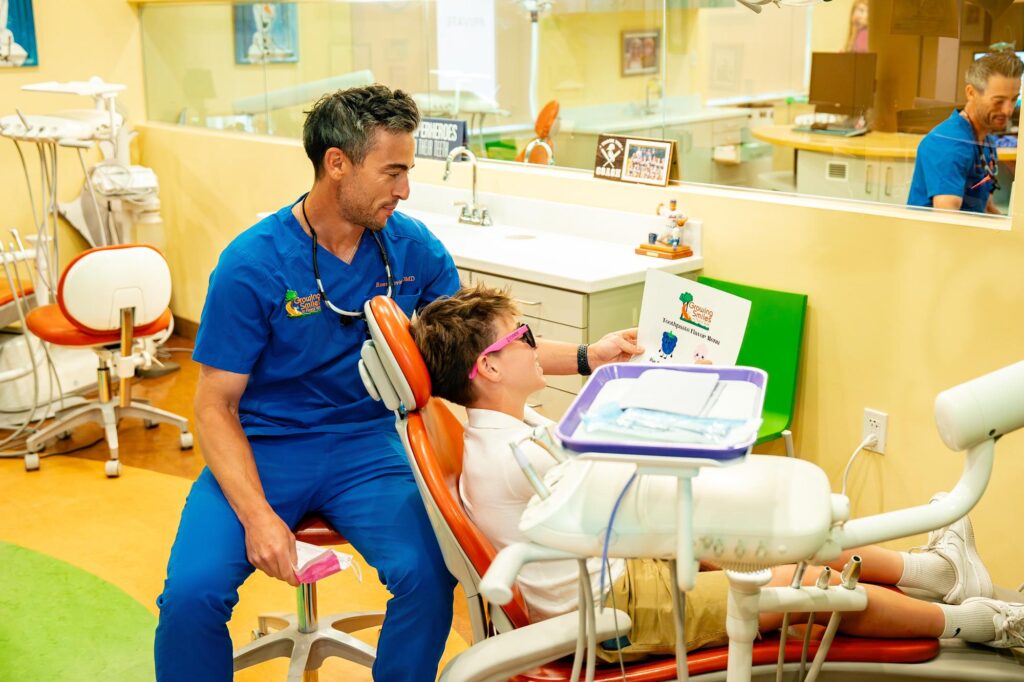
- Watch the interaction. Does the doctor kneel to your child’s level? Do they use “tell-show-do” techniques?
- Check logistics. Confirm location, scheduling flexibility, and how after-hours emergencies are handled.
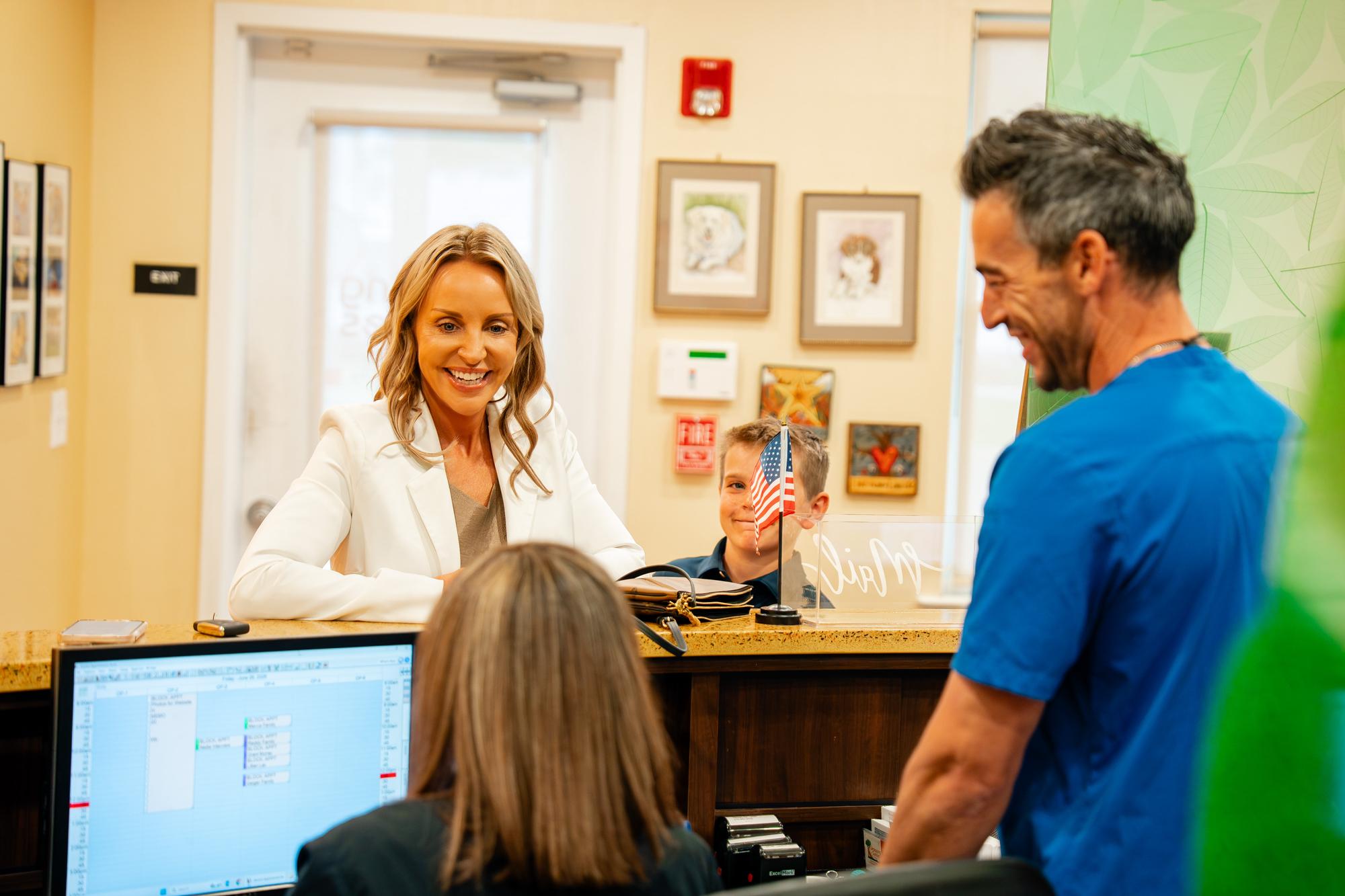
Dr. Sheryl Radin and Dr. Ross Levine take time during every first visit to answer questions and help your child feel at ease.
Benefits of a Dedicated Pediatric Dental Practice
A family-oriented practice built for children offers benefits a general office may not match. From the waiting room décor to the size of the instruments, everything is scaled for kids, which helps families from Newtown and neighboring Bucks County towns feel right at home from the moment they walk in.
What Makes a Pediatric Office Kid-Friendly?
Key benefits include:
- Child-friendly environment that builds positive associations with dental care from the very first visit
- Preventive focus with cleanings and check-ups, sealants, and fluoride treatments to stop cavities before they start
- Behavior-management expertise for anxious kids, toddlers, and children with special needs
- Nutrition counseling that helps parents make cavity-smart food choices at home
- Advanced options like laser frenectomy for tongue-tie and lip-tie, using CO2 laser technology for a minimally invasive experience with no bleeding or stitches
Why Does Specialty Training Matter?
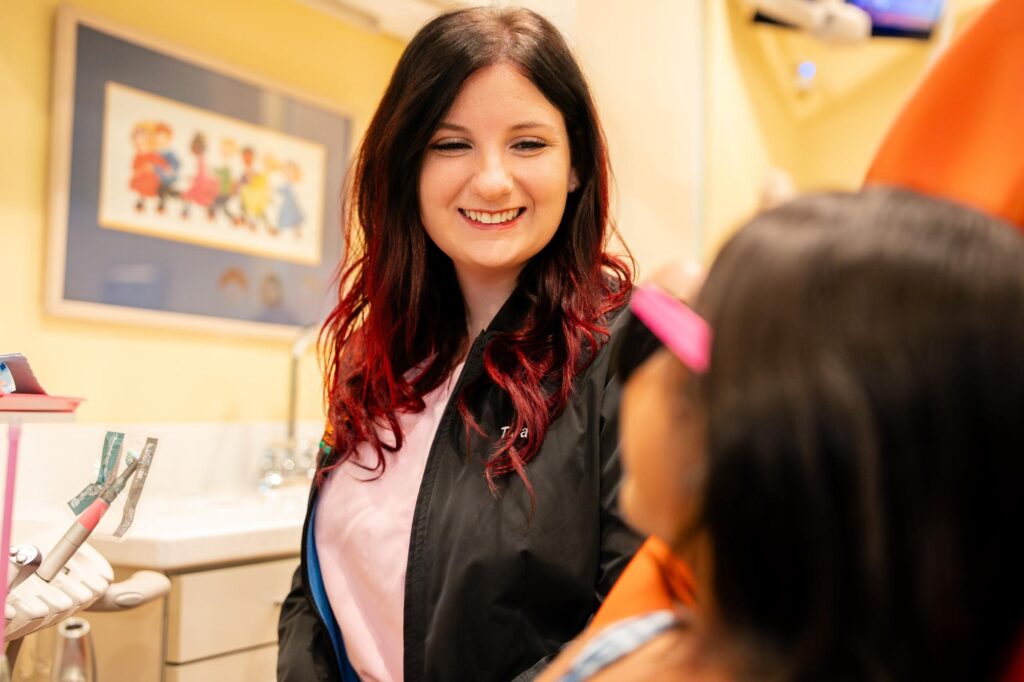
Pediatric-trained teams also know how to read a child’s cues. A wiggly toddler and a nervous 10-year-old need different approaches, and that’s where specialty training really shines. The extra years of residency prepare our doctors to spot subtle signs of anxiety, adapt their pace, and keep each child feeling safe throughout care.
Pediatric Dentist vs. General Dentist: Key Differences
Both pediatric and general dentists provide excellent care, but their training and focus differ. A pediatric dentist has completed extra residency years working only with children, while a general dentist treats patients of all ages.
| Feature | Pediatric Dentist | General Dentist |
|---|---|---|
| Extra training after dental school | 2-3 years focused on children | None required |
| Office design | Built for kids and families | Designed for all ages |
| Behavior guidance training | Extensive | Limited |
| Growth and development monitoring | Central to care | Less emphasized |
| Sedation options for children | Trained in oral conscious sedation and nitrous oxide | May refer to specialists |
| Common services | Zirconia crowns, laser frenectomy, sealants | Adult restorative, cosmetic, general care |
General dentists often refer complex pediatric cases, like tongue-tie treatment or full-mouth restoration on baby teeth, to a pedodontist. If your child has dental anxiety, developmental needs, or requires restorative work, a pediatric specialist is usually the better choice, which is why many Newtown-area families choose to make the short trip to a dedicated pediatric office instead.
How Much Does Pediatric Dental Care Cost?
Cost varies depending on the type of care your child needs. Routine visits are typically the most affordable, while restorative work and oral conscious sedation carry higher fees. Insurance coverage, payment plans, and the specific treatment plan all affect your out-of-pocket total. We know cost matters to families, so we always talk it through with you before treatment begins.
Here’s a general breakdown of what influences cost. In the legend below, $ means lower cost, $$ means moderate, and $$$ means higher:
| Service | Cost Level | Notes |
|---|---|---|
| Cleanings and check-ups | $ | Usually covered by most dental insurance |
| Digital X-rays | $ | Low-radiation, taken as needed following ALARA (as low as reasonably achievable) |
| Sealants and fluoride | $-$$ | Preventive care that saves money long-term |
| Zirconia crowns | $$-$$$ | For severely decayed or fractured baby teeth |
| Oral conscious sedation | $$-$$$ | For anxious kids or longer treatments |
| Laser frenectomy | $$-$$$ | Minimally invasive with no bleeding or stitches |
When comparing offices, ask for a written treatment plan and confirm what insurance will cover. A small investment in regular cleanings and check-ups today often spares your child a bigger restorative bill later, which is why prevention is worth prioritizing from the start.
Is Your Child a Good Fit for a Pediatric Dentist?
Every child benefits from pediatric dental care, but some situations make specialty care especially valuable. A pedodontist is a great fit if:
- Your child is between infancy and the teen years
- Your baby is showing signs of tongue-tie, lip-tie, or feeding difficulties
- Your child has dental anxiety or a sensory sensitivity
- Your child has special healthcare needs
- You want a prevention-focused dental home from day one
- Your child needs restorative work like crowns or oral conscious sedation
The American Academy of Pediatric Dentistry recommends establishing a dental home by your child’s first birthday or when the first tooth erupts, whichever comes first. Early visits help catch small issues before they grow into bigger ones, and they set the tone for a lifetime of healthy smiles. Families with active toddlers, busy grade-schoolers, or teens preparing for orthodontic work all find that a specialist’s approach makes each visit smoother and far less stressful for everyone involved, whether you’re coming from right here in Yardley or making the short drive over from Newtown.
Frequently Asked Questions
At what age should my child first see a pediatric dentist?
The American Academy of Pediatric Dentistry recommends your child’s first visit by age one or within six months of the first tooth appearing. Early visits establish a dental home, catch concerns early, and help your child feel comfortable with dental care from the start.
How often should kids have dental check-ups?
Most children benefit from cleanings and check-ups every six months. Kids with a higher risk of cavities, orthodontic concerns, or special needs may be seen more often. Dr. Radin and Dr. Levine will recommend a schedule based on your child’s individual needs.
Are dental X-rays safe for children?
Yes. Digital X-rays use very low radiation, and we follow the ALARA (as low as reasonably achievable) principle to keep exposure minimal. A single digital X-ray exposure is a small fraction of the natural background radiation your child already receives each year, and we only take them when clinically needed.
What is sedation dentistry and when is it needed?
Oral conscious sedation and nitrous oxide (laughing gas) help kids stay calm during dental care. Nitrous oxide is a mild, sweet-smelling gas for routine work, while oral conscious sedation suits longer treatments or children with significant anxiety. Both options are safe when provided by trained pediatric dentists.
What is a laser frenectomy for tongue-tie?
A laser frenectomy is a quick procedure that releases the tight band of tissue under the tongue or upper lip that restricts movement. Using a CO2 laser means no bleeding, no stitches, and a lower risk of infection. It can help with feeding, speech, and future dental health.
How do I help my child feel comfortable at the dentist?
Speak positively about dental visits, avoid words like “hurt” or “shot,” and read kid-friendly books about the dentist beforehand. At Growing Smiles in Floral Vale, we use the “tell-show-do” technique so your child knows what’s happening at every step. Kids love us & parents trust us!