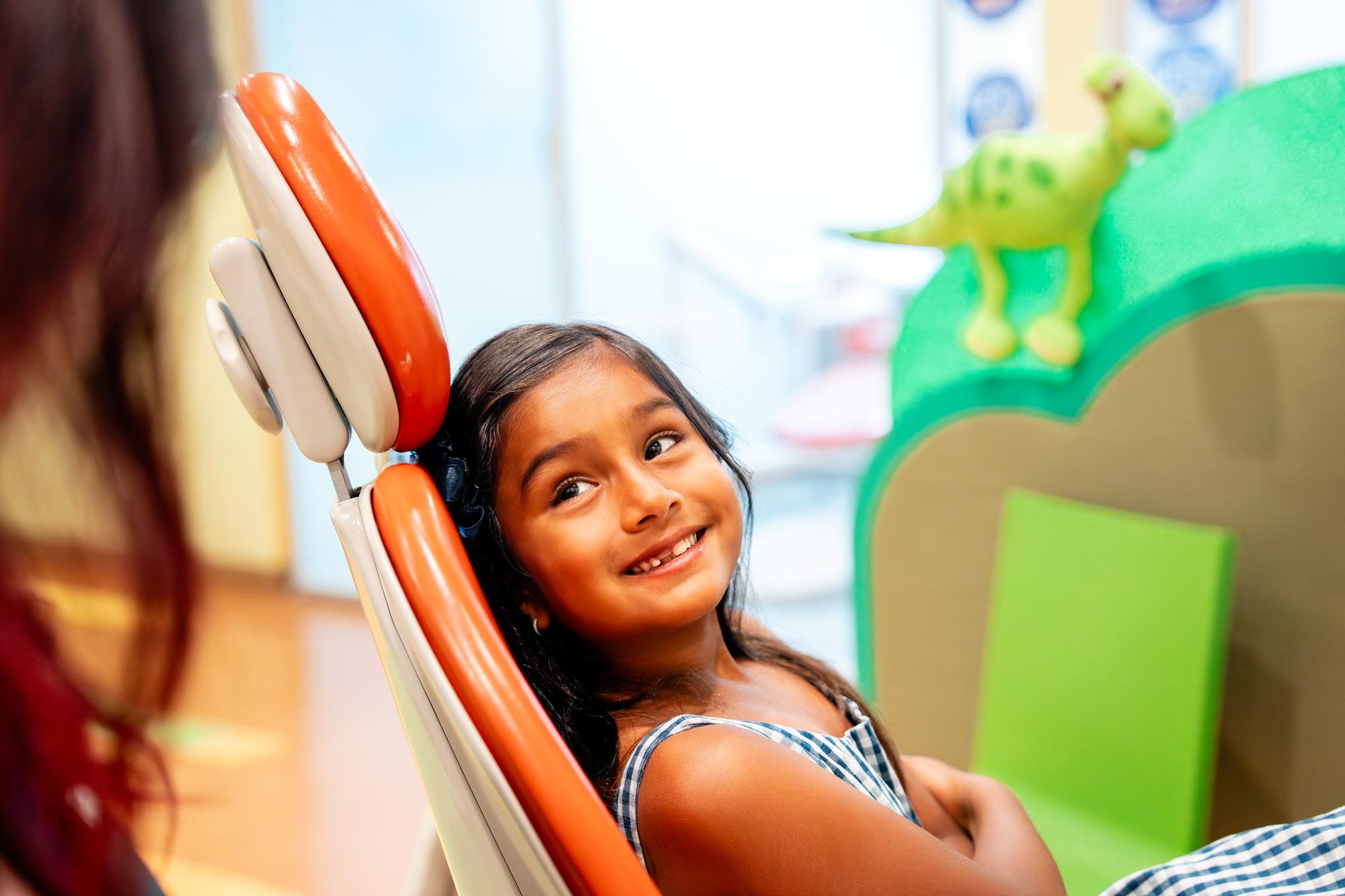
Helping your child overcome dental anxiety starts with understanding that their fear is real, not stubbornness. At Growing Smiles in Floral Vale, Dr. Ross Levine helps anxious kids feel safe in the dental chair. This guide walks you through what causes pediatric dental fear, how pediatric dentists address it, and the practical steps you can take at home before your next visit.
What Is Dental Anxiety in Children?
Dental anxiety in children is a genuine fear response to dental care that can trigger crying, physical symptoms, and avoidance behaviors. It isn’t misbehavior or a phase to brush off. Published research estimates that roughly 9 to 20 percent of children worldwide experience some form of dental anxiety, making it one of the most common childhood fears tied to healthcare.
Common signs look different at different ages. Younger kids may cry, cling, or throw tantrums at the office door. Older children often complain of stomachaches, headaches, or trouble sleeping the night before a visit. Some refuse to open their mouth or sit in the chair at all.
It’s important to tell true anxiety apart from normal toddler resistance. A two-year-old who squirms during a cleaning is usually just being two. A seven-year-old who panics weeks before a visit is showing something deeper.
Catching this early matters. Children who learn to manage dental fear young carry healthier habits into adulthood. At Growing Smiles in Floral Vale, we treat anxiety as part of the care plan, not an obstacle to it.
What Causes Dental Anxiety and How Pediatric Dentists Address It
Pediatric dental fear usually has more than one root cause. Understanding where it comes from helps parents and providers respond in the right way.
Common Causes of Dental Fear in Kids
- Fear of the unknown. New sounds, lights, and smells can overwhelm a child who doesn’t know what to expect.
- Past negative experiences. A rough cleaning, a painful filling, or even a long wait can stick with a child for years.
- Parental anxiety transfer. Kids pick up on your body language. If you tense up at the word “dentist,” they will too.
- Sensory sensitivities. Neurodivergent children, including those with autism or ADHD, may struggle with the suction sound, the chair recline, or the taste of fluoride.
- Loss of control. Lying back with a stranger’s hands in your mouth is unsettling at any age. For a child, it can feel scary.
How Pediatric Dentists Respond
Pediatric dentists use a set of behavior guidance techniques recognized by the American Academy of Pediatric Dentistry (AAPD) to help kids feel in charge of their own visit. Tell-show-do is the foundation: we tell your child what we’re going to do in simple words, show them the tool on a finger or mirror, then do the step itself. Positive reinforcement, distraction, and friendly conversation keep anxious kids engaged, and a calm, consistent voice helps them know what comes next.
Pediatric dentists complete two to three additional years of specialized training beyond dental school. That training covers child development, behavior guidance, and treatment of kids with special healthcare needs. It’s the reason a pediatric office feels so different from a general practice.
Benefits of Addressing Dental Anxiety Early
When you tackle dental fear while your child is young, the payoff lasts a lifetime. Avoidance only makes the problem bigger. A scared child skips cleanings, small cavities grow into bigger ones, and the next visit becomes even more stressful. Breaking that cycle early changes everything.
Here’s what early intervention delivers:
- Prevents the fear-avoidance cycle. Kids who feel safe at the dentist keep coming back. Regular care catches small problems before they hurt.
- Reduces untreated cavities. Anxious children are more likely to skip visits, which raises their risk of decay, infection, and tooth loss.
- Builds lifelong habits. A child who learns to sit through a cleaning at age four is far more likely to schedule their own cleanings at age twenty-four.
- Lowers the need for invasive treatment later. Preventive care means fewer fillings and fewer extractions down the road.
- Supports nutrition, speech, and school attendance. Healthy teeth let kids eat a full diet, speak clearly, and avoid dental pain that keeps them home from school.
- Improves the whole family’s experience. When one child dreads the dentist, the whole household feels it. A calm visit means a calmer week.
At Growing Smiles in Floral Vale, we think of each visit as a building block. Every positive experience makes the next one easier. That’s the growing smiles difference, and it’s why so many families stay with us from the first tooth through the teenage years.

Pediatric Dentist vs. General Dentist for Anxious Kids
Not every dentist is trained to work with kids, especially anxious ones. The differences go well beyond the waiting room decor.
| Feature | Pediatric Dentist | General Dentist |
|---|---|---|
| Specialized training | 2-3 extra years in child behavior and development | None required beyond general dental school |
| Office environment | Designed for children, with kid-scaled furniture and a welcoming feel | Adult-focused clinical setting |
| Behavior techniques | Tell-show-do, distraction, positive reinforcement | Varies, often not formally trained |
| Equipment | Smaller instruments sized for little mouths | Standard adult tools |
| Staff training | Age-appropriate language, patience with meltdowns | General patient communication |
| Special needs care | Trained for autism, ADHD, sensory sensitivities | Limited specialized experience |
Dr. Ross Levine is a pediatric dentist, and that specialized background shapes every part of a visit at Growing Smiles in Floral Vale, from how we greet your child at the door to how we explain each step of a cleaning. The AAPD’s behavior guidance recommendations are written with this kind of child-centered care in mind, and they are a good benchmark when you’re choosing a provider for an anxious child.
How to Prepare Your Child at Home
Preparation at home does a lot of the work before your child ever reaches the office. The right approach depends on age.
- Toddlers (ages 1 to 3): Keep it simple and playful. Read a picture book about visiting the dentist, let your child “count” your teeth with a toothbrush, and practice opening wide at home. Avoid long explanations.
- Preschoolers (ages 3 to 5): Use honest, positive words like “count your teeth” and “clean your smile.” Role-play with a stuffed animal as the patient. Skip words like “shot,” “hurt,” or “drill,” which can plant fears that weren’t there.
- School-age kids (ages 6 to 11): Answer questions directly and let them ask about anything on their mind. Give them a sense of control by letting them choose which toothbrush or flavor of toothpaste to bring.
- Teens: Treat them as partners in their own care. Many teens worry about embarrassment or judgment about brushing habits, so reassure them that the visit is about helping, not grading.
A few habits help at every age:
- Keep your own tone calm and neutral when you talk about the visit.
- Avoid bribes or threats tied to the dentist.
- Plan the appointment for a time of day when your child is rested and fed.
- Try the 3-3-3 grounding exercise at home (see the FAQ below) so it feels familiar if worry spikes.
Which Children Benefit Most from Anxiety-Focused Care
Some kids need extra support more than others. If your child fits any of the profiles below, an anxiety-focused approach can make a real difference:
- Children with past traumatic dental or medical experiences. A single bad visit, hospital stay, or emergency can leave lasting fear.
- Kids with autism, ADHD, or sensory processing differences. Bright lights, loud suction, and unexpected touch can overwhelm these children quickly.
- Highly anxious kids who refuse to enter the office. If getting out of the car is already a battle, you need a team that knows how to turn things around.
- Children facing extensive treatment. Multiple fillings or crowns call for careful planning and pacing.
- Kids whose parents have dental phobia. Fear transfers easily. If you dread the dentist, your child probably senses it.
- First-time dental visitors over age 3. Older first-timers often arrive with ideas about the dentist already formed by cartoons, siblings, or classmates.
If any of these sound familiar, Dr. Ross Levine would be glad to meet your family and plan an approach that fits your child.

Frequently Asked Questions
How do pediatric dentists handle anxiety in children?
Pediatric dentists use a layered approach built on behavior guidance. The first line is tell-show-do, positive reinforcement, distraction, and simple, age-appropriate language. The goal is always the least invasive technique that lets your child get safe, effective care while feeling respected and in control. If your child needs extra support, talk with the dental team before the visit so a plan can be made together.
What is the 3-3-3 rule for anxiety in children?
The 3-3-3 rule is a grounding technique for managing anxiety in the moment. Your child names three things they can see, three things they can hear, and moves three parts of their body (like wiggling toes or fingers). It helps pull their focus out of panic and back into the present. Parents can practice this at home before a visit.
What is the best way to manage dental anxiety?
The most effective approach combines early exposure, a pediatric specialist, and consistent positive experiences. Start dental visits by age one so your child grows up seeing the dentist as normal. Choose a provider trained in child behavior. Avoid using the dentist as a threat (“if you don’t brush, you’ll need a filling”) and keep your own anxiety out of the conversation.
At what age should my child first see the dentist?
The AAPD recommends your child’s first visit by age one, or within six months of the first tooth coming in. Early visits establish a dental home, let us catch issues early, and help your child get comfortable with the office long before any treatment is needed.
How can I tell if my child’s fear is more than normal nervousness?
Occasional nervousness is common and usually settles once your child sees that nothing scary is happening. Fear that starts days or weeks before a visit, physical symptoms like stomachaches, or refusal to enter the office are signs that your child may benefit from extra support. Let the team know ahead of time so they can plan a gentler, slower-paced visit.
Should I tell my child exactly what will happen at the dentist?
Share simple, positive, and truthful details, such as “the dentist will count your teeth and clean them.” Avoid scary words or too much detail, and don’t promise that nothing will feel strange. Children trust adults who describe things honestly, and that trust makes the visit go more smoothly.
If your child is scared of the dentist and you’re ready for a different kind of visit, we’d love to meet your family. Growing Smiles in Floral Vale serves kids throughout Yardley, Newtown, Bucks County, and the surrounding areas. Call us at (215) 860-9808 or request a visit online to get started. Our family, one focus, your child!